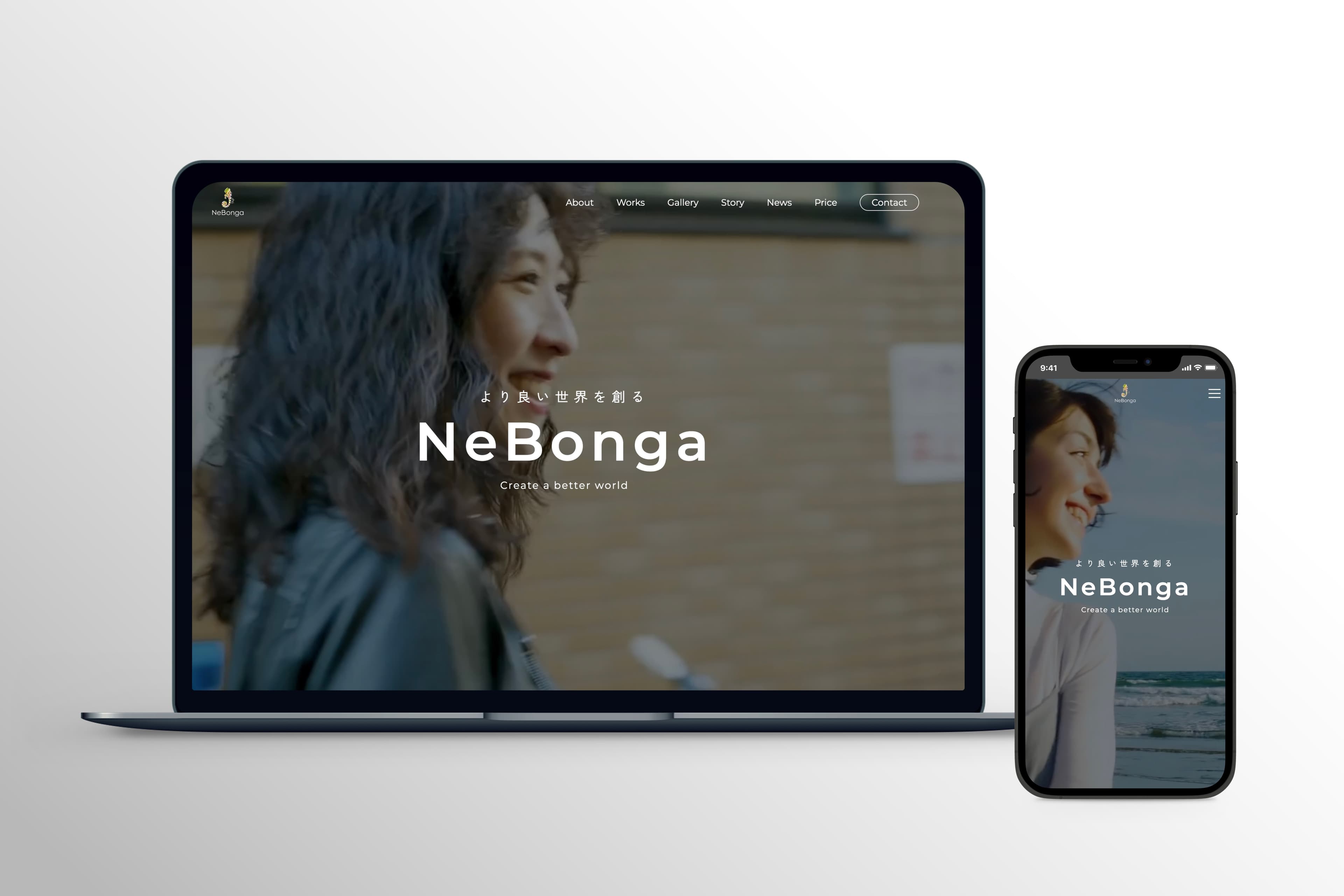
Nebonga
TailwindTypeScriptNext.js
Summary
Nebonga.com is a modern, high-performance [creative portfolio / media site] built with a Headless CMS architecture. The project focuses on delivering a unique digital experience through a seamless blend of original visual design and fluid, high-quality user interactions. By decoupling the frontend from the WordPress backend, the site achieves exceptional speed and a highly customized UI.
Features

- Headless CMS with WordPress: Leverages WordPress as a powerful backend for content management while maintaining full control over the frontend presentation.
- GraphQL Integration: Utilizes GraphQL to fetch precise data, minimizing API overhead and ensuring fast page load times.
- Original UI/UX Design: Every visual element and layout was designed from scratch, focusing on a minimalist and intuitive aesthetic.
- Dynamic Interactive Motion: Features sophisticated transitions and scroll-based animations that enhance user engagement and provide a premium feel.
The Most Difficult Part
The most challenging aspect was implementing complex and natural-feeling animations across the site. As this was my first time using Framer Motion, I initially struggled with orchestrating multiple animation sequences—such as page transitions and entrance effects—while maintaining optimal performance. Synchronizing the data fetching from the CMS with the animation timing required a deep understanding of component lifecycles.
How to Solve the Problems
To overcome these challenges, I took the following approaches:
- Deep Dive into Framed Motion: I studied Framer Motion’s "variants" and "AnimatePresence" features to manage complex animation states efficiently, ensuring that components mounted and unmounted smoothly.
- GraphQL Optimization: To prevent lag during transitions, I optimized data queries using GraphQL to retrieve only the necessary fields, significantly reducing the payload and keeping the frame rate stable.
- Design-to-Code Workflow: Since I handled the design myself, I prototyped layouts with motion in mind. This allowed me to simplify the code logic by making design decisions that were both visually striking and technically feasible to animate.